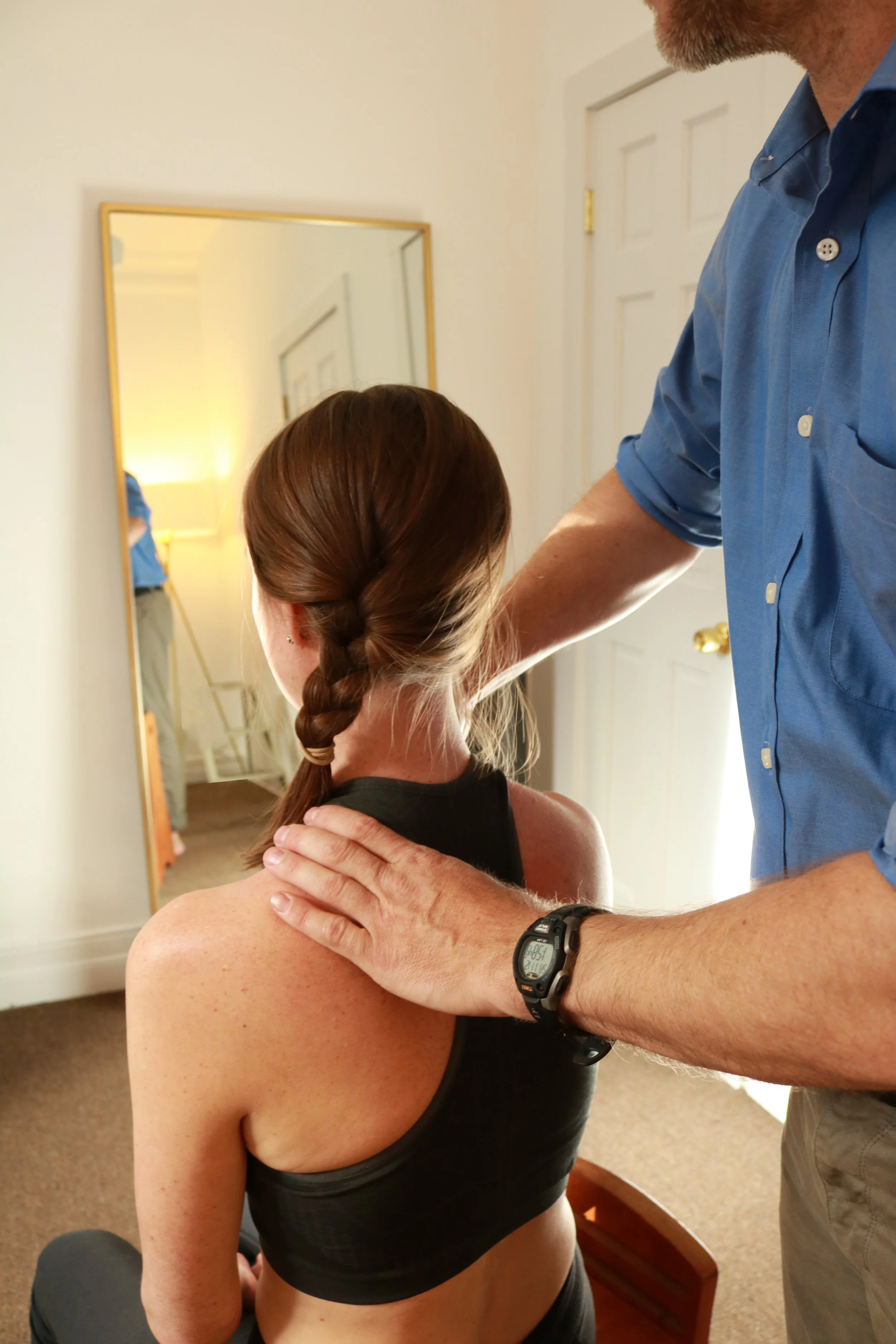
Chronic back pain is one of the most common reasons people seek out Structural Integration — and one of the conditions that responds most consistently to this work. If you've tried physical therapy, chiropractic, massage, or medication with limited lasting results, there's a reason: most of these approaches treat the site of pain rather than the underlying structural pattern that created it.
Structural Integration takes a different view.
Why Back Pain Is Rarely Just a Back Problem
The back doesn't exist in isolation. It is part of a continuous system of muscles, fascia, and connective tissue that runs throughout the entire body. When one part of that system is shortened, compressed, or pulled out of alignment — whether from an old injury, years of sitting at a desk, emotional stress, or repetitive movement — other parts compensate. Often the compensation happens far from the original problem.
A tight hip flexor can pull the pelvis forward and compress the lumbar spine. Collapsed arches in the feet can rotate the entire lower leg and create strain up through the sacrum. Chronic tension in the shoulders and neck can load the upper back and contribute to thoracic pain. The back hurts because it's caught in the middle of a whole-body pattern.
Structural Integration addresses the whole pattern, not just the painful area.
How the Work Addresses Back Pain
Hellerwork Structural Integration works primarily with the fascial system — the web of connective tissue that surrounds and connects every muscle, bone, and organ in the body. When fascia becomes thickened, adhered, or shortened due to injury or chronic stress, it limits movement, compresses joints, and creates the conditions for pain.
Through precise, hands-on manipulation of the fascial tissue, combined with movement education and somatic awareness, Hellerwork works to:
Release compression in the lumbar spine by lengthening the hip flexors and restoring pelvic balance
Address restrictions in the thoracic spine that limit rotation and load the lower back
Improve the relationship between the pelvis, sacrum, and lower extremities
Retrain movement patterns — how you sit, stand, walk, and lift — that perpetuate the problem
Reduce the bracing and guarding patterns in the nervous system that keep the body locked in pain
The Role of the Nervous System and Kinesthesia
Many patterns of bracing, restriction, and chronic tension have as much to do with the nervous system as they do with the physical tissue itself. The body's kinesthetic sense — its ability to perceive its own position, movement, and effort — can become distorted over time through injury, stress, or habitual movement patterns. When this happens, the nervous system loses accurate feedback about what the body is actually doing, and compensatory bracing patterns become deeply ingrained without the person even being aware of them.
A significant part of the work in Hellerwork is reconnecting the body to this kinesthetic awareness — helping the nervous system develop a more accurate, nuanced sense of how the body is organized and moving. When that connection is restored, many patterns of tension and restriction that seemed purely structural begin to soften on their own. The body doesn't need to brace against what it can clearly sense and trust. This is why the movement education and dialogue components of Hellerwork are not secondary to the bodywork — they are often where the most lasting change takes place.
The work is systematic. Rather than repeatedly treating the same painful area, the Hellerwork series addresses the body as a whole over 11 sessions, getting progressively deeper into the structural patterns that underlie chronic conditions.
What Clients With Back Pain Typically Experience
Many clients with chronic back pain notice changes within the first few sessions — not just in the back itself, but in how the whole body feels. Common experiences include:
Greater ease in standing and walking
Reduced muscle tension and guarding
Improved mobility and range of motion
A sense of length and space in the spine that may not have been felt in years
Decreased reliance on pain management strategies over time
Results vary depending on the nature and duration of the condition, but clients who engage fully with the movement education component — bringing the awareness developed in sessions into their daily lives — tend to see the most lasting change.
Is This Work Right for Your Back Pain?
Hellerwork Structural Integration works well for many types of back pain, including lower back pain, sciatica, SI joint dysfunction, disc herniation, scoliosis, lordosis, kyphosis, and pain related to postural imbalance or repetitive strain. It can also be helpful during recovery from surgery or injury when the body has developed compensatory patterns around the original problem.
If you've been managing back pain for months or years and haven't found lasting relief, this work may address what other approaches have missed.
David Murphy sees clients in Manhattan, Beacon, NY, and Cold Spring, NY. A free 30-minute consultation — in person or by phone — is available to discuss your specific situation and whether this work is appropriate for you.
Schedule a free consultation