Many people who come to Structural Integration for physical reasons — chronic pain, tension, restricted movement — eventually recognize something deeper at work. The body holds more than just structural patterns. It holds history.
For people who have experienced trauma, this isn't a metaphor. It's physiology.
Trauma Lives in the Body
When we experience something overwhelming — an accident, a loss, violence, prolonged stress, or any event the nervous system couldn't fully process — the body responds. Muscles brace. The breath shortens. The diaphragm tightens. Certain parts of the body go numb while others become chronically activated.
These responses are intelligent. They are the nervous system's way of protecting us in a moment of threat. The problem is that they often don't fully resolve once the threat has passed. The body stays in a state of readiness — guarded, compressed, braced — long after the event itself is over.
This is what trauma researchers like Dr. Peter Levine, developer of Somatic Experiencing, mean when they say that trauma is not in the event itself, but in the nervous system's response to it. The body becomes the site where unresolved experience is stored, and where healing ultimately needs to happen.
How Hellerwork Addresses Trauma
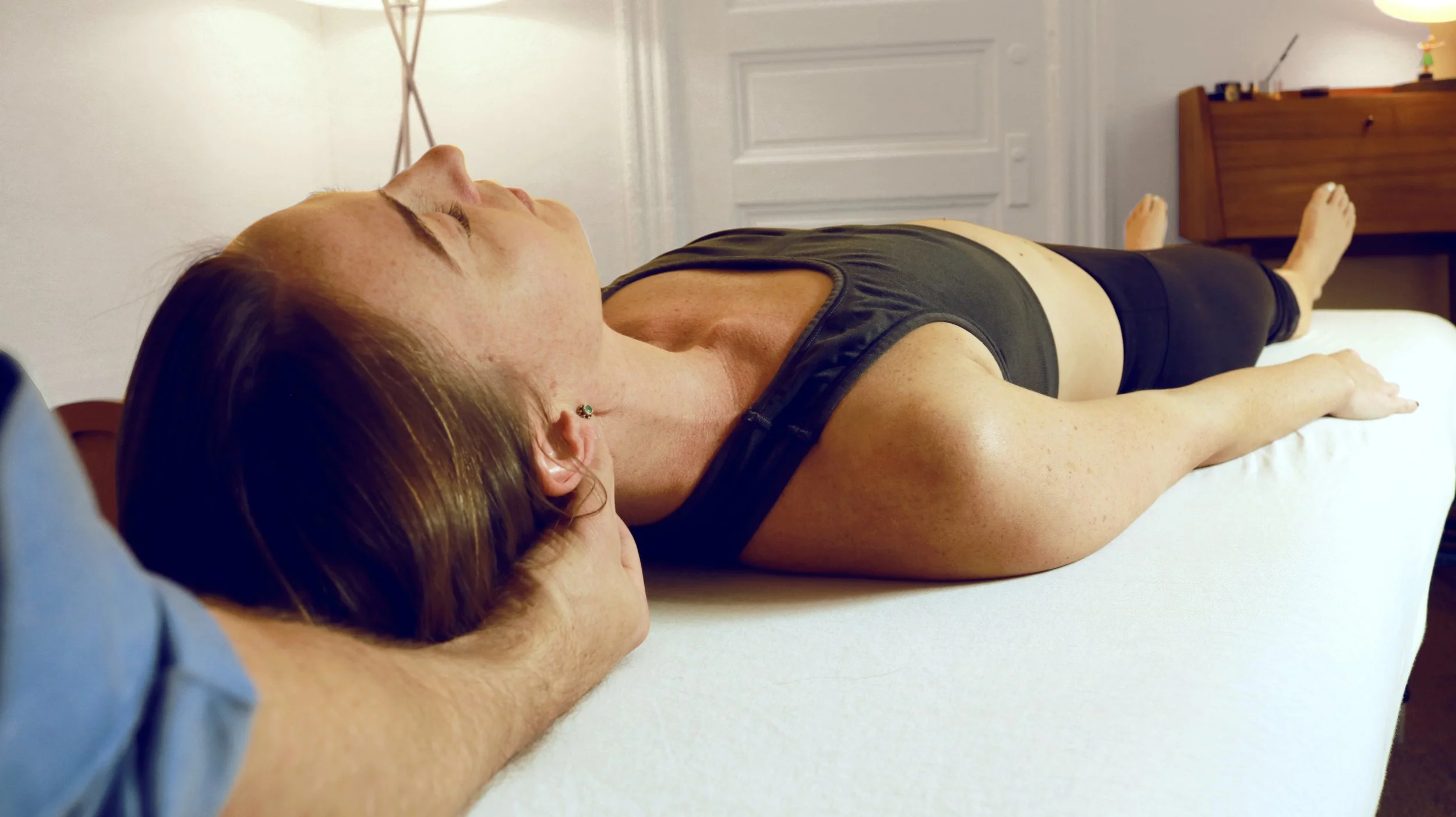
Hellerwork Structural Integration works directly with the body's connective tissue and nervous system — which makes it particularly well-suited for trauma work. Unlike approaches that focus primarily on cognitive processing, Hellerwork works somatically, through physical experience and awareness.
The hands-on component of the work releases chronic holding patterns in the body's tissue and nervous system. Many of the braced, guarded patterns that trauma leaves behind are as much a function of the nervous system as they are of the physical structure — the body's kinesthetic sense becomes distorted, and it loses accurate awareness of where it is holding, how much effort it is using, and what it actually feels safe to release. Hellerwork works to restore that kinesthetic connection, helping the nervous system develop a clearer, more trustworthy sense of the body's organization. When that awareness returns, deeply ingrained patterns of bracing and compression can begin to shift in ways that purely physical approaches often cannot achieve. Areas that have been guarded or compressed for years can begin to soften and reorganize, and clients often notice corresponding shifts in their emotional or psychological experience: a sense of relief, increased spaciousness, or the surfacing of feelings that had been held at bay.
The movement education component helps clients develop new patterns of movement and posture that support an open, regulated nervous system rather than a defended one.
The dialogue component — unique to Hellerwork — provides a structured space to explore the relationship between physical patterns and emotional experience. This isn't psychotherapy, but it is a somatic inquiry that can illuminate how the body's holding patterns connect to broader patterns in a person's life.
PTSD and Structural Integration
For clients with PTSD specifically, Structural Integration can be a valuable complement to psychotherapy and other trauma treatments. Because it works through the body rather than through narrative or cognitive processing alone, it can access layers of experience that talk therapy sometimes can't reach.
David Murphy has deepened his understanding of trauma and its treatment through extensive study of Somatic Experiencing, the approach developed by Dr. Peter Levine. This training informs how he works with clients whose physical symptoms have roots in traumatic experience — bringing care, precision, and an understanding of the nervous system's role in both holding and releasing trauma.
Common presentations that may have trauma at their root include:
Chronic tension or pain that doesn't respond to conventional treatment
Hypervigilance or a persistent sense of being "on guard"
Difficulty feeling safe or comfortable in the body
Dissociation or numbness in certain areas
Symptoms of PTSD following accidents, injury, surgery, or other overwhelming experiences
Physical symptoms that intensify during stress or in certain environments
A Careful, Collaborative Approach
Trauma-informed bodywork requires particular care. The goal is not to push through or force release, but to work at a pace that the nervous system can integrate. David works collaboratively with clients to modulate the intensity of the work, ensuring that sessions feel supportive rather than overwhelming.
For clients who are also working with a psychotherapist, Structural Integration can powerfully complement that work — and David is happy to coordinate with other providers when appropriate. He can also suggest referrals for ongoing therapeutic support when clients would benefit from additional resources.
If you are living with the effects of trauma — whether or not you have a formal diagnosis — and are looking for a somatic approach that works directly with the body, this work may be worth exploring.
David sees clients in Manhattan, Beacon, NY, and Cold Spring, NY. A free 30-minute consultation is available to discuss your situation and whether this work is a good fit.
Schedule a free consultation